
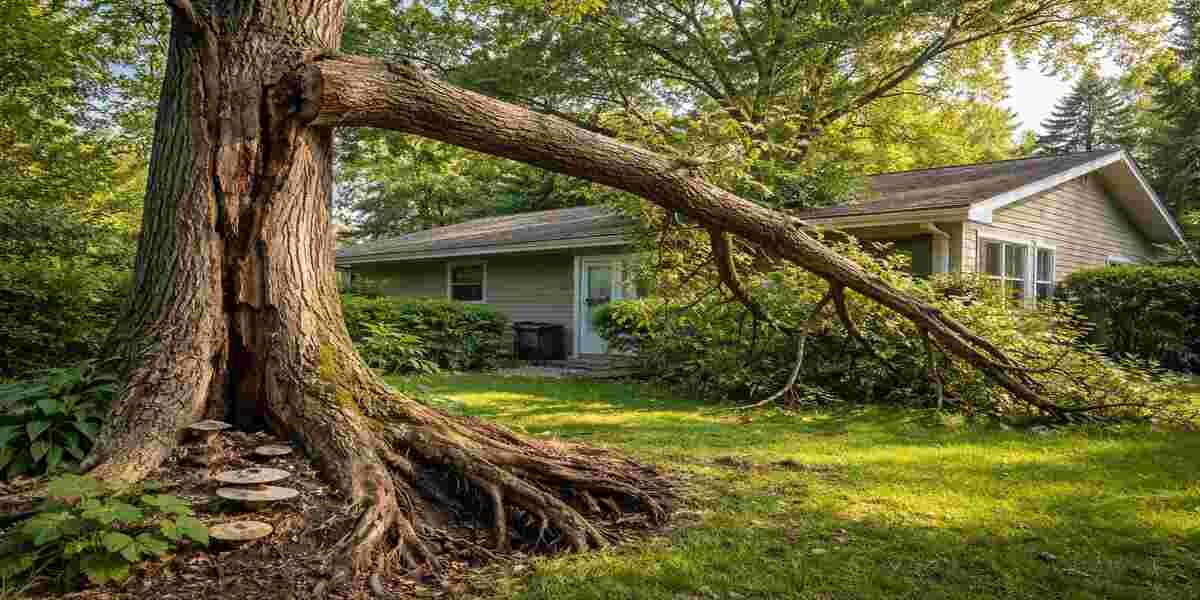
Immediate Removal Signs When a Tree Becomes Dangerous
Have you ever been in your yard and looked at your tree and thought, is this still a good tree or is it gradually becoming a sort of menace? Trees are a beauty and an asset to your property, however, once they get weak, they turn to be a big danger. It is very easy to be caught up by the initial signs of a storm or a strong wind before a homeowner realizes that they have suffered some damage.
Being aware of when a tree requires immediate removal would save your house, family and environment from expensive incidents, as per professional teams. Knowing such signs early will make you take action before things get out of control and become an emergency.
1. Dead or Dying Branches
One of the most obvious indicators that a tree should be removed is the presence of the dead or dying branches. When big limbs appear dry, split or drop down even in mild weather, the health of such a tree is failing. Branches that are dead may break out of the blue and injure people or break roofs and cars. A tree that is overloaded with deadwood is a common observation that indicates that the internal structure is not holding as well as it can and is the safest way out.
2. Trunk Cracks and Structural Damage
The trunk is the support of the whole of the tree and therefore it is never to be overlooked even in case of any significant damage. Deep cracks, splits, hollow spaces or cracked bark are demonstrators of serious weakness. The tree becomes unable to take its weight due to these flaws. A damaged trunk is much more liable to fall in the case of storms or the strong winds, so immediate professional attention is required.
3. Sudden Leaning of the Tree
A tree which begins to lean abruptly is a portentous omen. This normally implies failure of the root system below the ground. You can observe swellings on the ground around the foundation or roots sticking out of the ground. A tree that is leaning might fall at any time and this is particular when it is near houses, roads or paths and must be regarded as a serious safety problem.
4. Root Deformities and Fungal Infections
The roots make a tree stable and in case they are damaged, the whole structure becomes unsafe. Roots that have been exposed, broken or are in a state of decay, weaken the anchor of a tree. Other red flags are fungal growth around the base because it is usually a major indicator of internal rot. Although the tree may appear healthy above the surface, root issues may make it fall due to strong winds or heavy rain.
5. Storm and Weather Impact
The trees can have their branches split, or their trunks broken, or lack of support after storms. Although the tree may not be fallen, any occurrence can cause it to be unstable regardless of whether the tree has fallen or not. A tree that has been damaged by storms is much more probable to fail during the subsequent weather condition in case it is not treated. Timely check and response can eliminate unforeseen failure and damage of property.
6. Unsafe Site Close to Buildings
Positioning of trees is also important as health, especially when choosing low maintenance trees near structures. Branches that contact the roof, the power lines and the walls are more likely to cause damage and accidents. The tree and buildings in the area can be undermined by continuous interaction. Removal can be the best solution to your home and family since the growth will no longer be checked by trimming.
Conclusion
Trees make your landscape pretty even though safety is the first thing to put into consideration, according to the expert crew. The indications of a tree that may need to be removed immediately include dead branches, injury on the trunk, unusual leaning, root issues, fungal development and storm hit and unsafe positions. Prevention is one of the methods that can prevent injuries and property and expensive emergencies. A tree that cannot be safe is always hectic to work on before it smacks.