
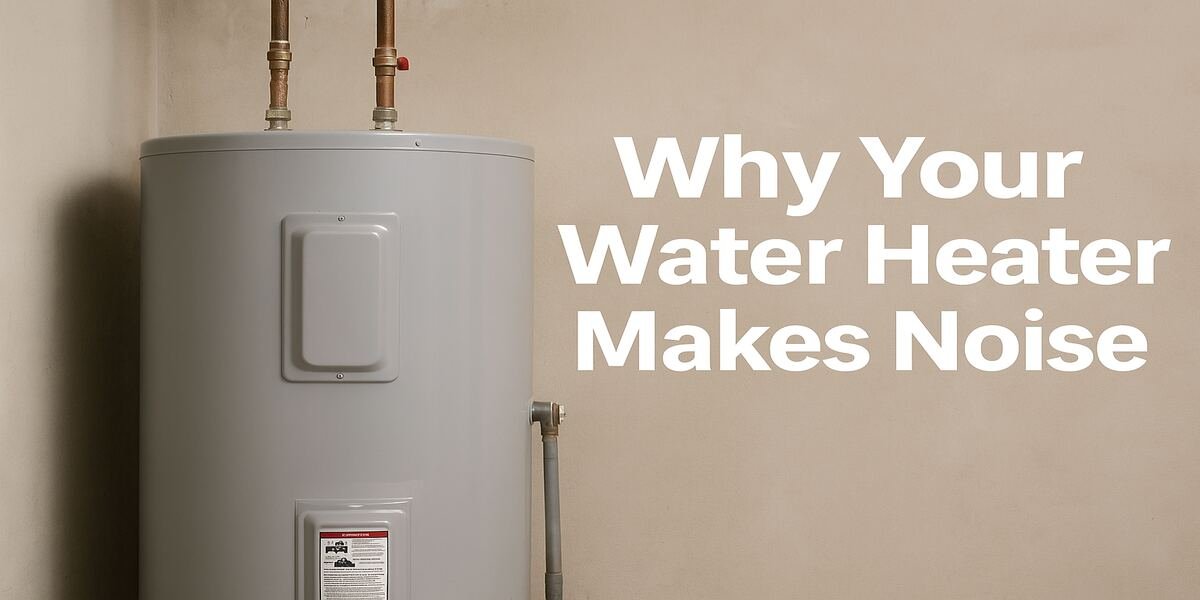
Did you ever pass your water heater and ask yourself, why does it sound like it is boiling or popping or even rumbling inside? It is shocking and even alarming when your water heater suddenly begins to make weird noises. It is just another appliance that is supposed to silently perform in the background after all. However, when strange noises start setting in, it is the heater trying to tell you that something is not alright.
The good news? The majority of these sounds are easily explained by apparent reasons that are easy to resolve. We will filter down to the reason why your water heater is making noise and what you can do to repair it.
1. Sediment Build-Up: The Least Dwelled Upon
Your aquarium naturally accumulates minerals and sediments that drift down to the bottom over time, as per the expert staff. While the heater is trying to heat up the water, the sediments get caught, and as the air bubbles rise through the sediment, they give off sounds similar to popping, crackling, or rumbling.
The Reason:
Calcium and magnesium are found in hard water, and they form sediment on heating.
Solution:
Rinsing your water heater at least once in a year can get rid of the deposit and stop annoying noises. In case the tank has not been correctly flushed in years, then a professional deep flush is necessary.
2. Heating Element Issues
When using an electric water heater the heating elements may become covered with deposits of minerals. When that occurs, the element becomes overheated producing hissing or buzzing sounds.
The Reason:
The heating element is overlaid by minerals which make it work harder.
Solution:
The noise is typically resolved by cleaning or replacing the heating element and this also increases the efficiency.
3. Water Pressure Problems
High pitch whistling or squealing will be an indication of too much pressure of water or a half-open valve that hinders the circulation.
The Reason:
It is a high pressure that causes the water to squeeze through the narrow gaps producing a sharp sound.
Solution:
Test the temperature and pressure relief valve (T&P valve) and the water inlet valve should be open completely. A pressure-reducing valve can also be installed in case the level of pressure is always high.
4. Dilating and Constraining Pipes
You may have heard tapping, knocking, or clicking. When it is not the heater making the noise, it may be the pipes. Hot water causes pipes to swell and shrink as it passes through pipes particularly when the pipes rub against walls or framing.
The Reason:
Change in temperature moves the pipes in little ways, resulting in friction.
Solution:
Wrap the pipes or provide cushions to minimize the movements and noise.
5. The tank is Crashing End of its Life
There could be a deep rumbling sound or a popping sound that does not stop even after maintenance, which could be an indication that your heater is old. During a period of time, the tank is worn down by corrosion and the deposition of sediments.
The Reason:
Tanks which are old suffer from efficiency and internal wear.
Solution:
When your heater is above 10-12 years of age, it is time to change it. Its new unit will not just be quieter, but it will also be more energy efficient.
Conclusion
One should not overlook a noisy water heater, according to the professional team. Starting with the sounds of harmless expansion and more serious problems, such as accumulating sediments and pressure problems, all the noises tell a story. You can also save a lot of money down the line because when your heater is attempting to communicate something, you can save time and make a fast fix to stop it from happening.
Some simple maintenance now will ensure that your water heater continues to run silently, efficiently and safely- and that you have the cosy calmness you need in your home.