
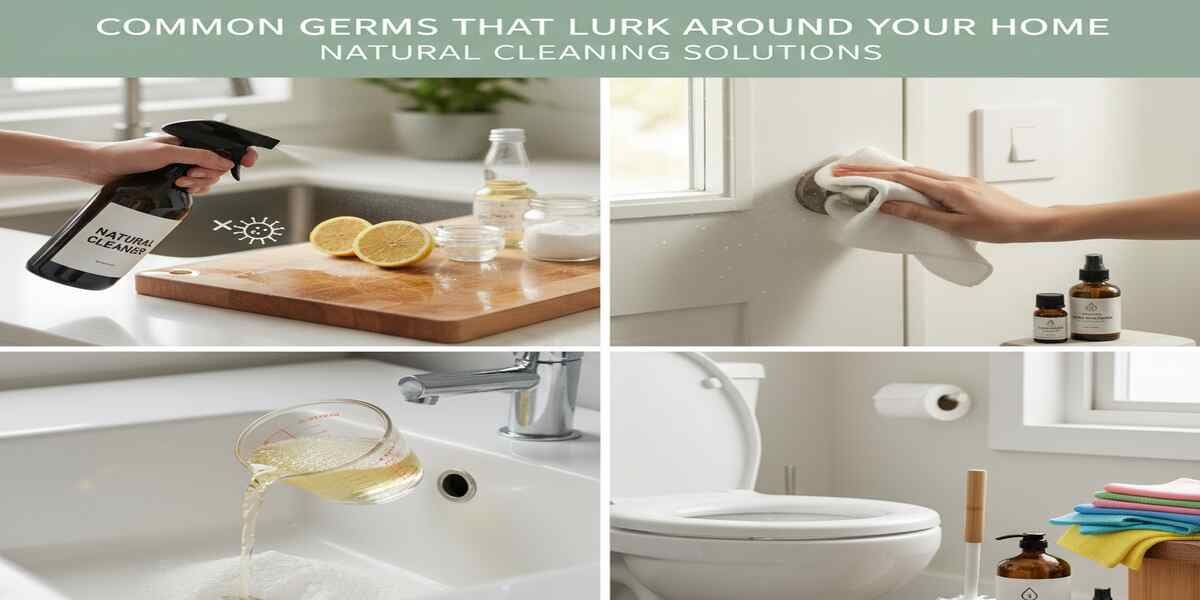
Common Germs That Lurk Around Your Home Naturally
Did you know that the glitzy kitchen surface and the wet bathroom sink may still host millions of bacteria? The most rigorous cleaning processes of sweeping, wiping, and disinfection do not remove the small germs in the corners, sponges that stick together, and the bathroom handles. These microorganisms, which grow in damp dark areas, may produce unpleasant smells, food-borne disease, or skin infection, something that no one would like to see in their house.
The best thing is that you do not need to use severe chemicals or overwhelming sprays to ensure that you keep them off. With the help of natural products like vinegar, lemon, and baking soda, as well as a couple of simple everyday practices, you can ensure that your family is safe, and at the same time keep your home clean and attractive.
1. E. coli – The Kitchen Visitor
E. coli has the ability to be present on cutting boards, sinks, and even raw meat containers. It is contagious and may render you ill in case you consume infected food. Warm vinegar solution is very effective to use on food preparation surfaces as the solution kills germs without any chemical residues. After cooking, you must wash your hands. In case you have a sponge with a microwave safe.
It is better to heat it for 30 seconds and kill all the bacteria that are still living in it in order to make it last longer. These minor measures make your kitchen cleaner and safer, supporting a good cleaning company and promoting high hygiene standards similar to vacate cleaning Perth services..
2. High-Touch Doors and Light Switches Doors
We touch the doorknobs and light switches more than a dozen times a day; they are the best places where germs can be. Wipe down these surfaces once a week with a home-prepared spray consisting of water, vinegar, and a drop of tea-tree oil. The oil smells pleasant in smell and it kills germs. Always keep a small spray can to wipe them after cooking or when you find them dirty. This fast habit will ensure that surfaces of high contact are kept clean and minimise germs throughout your household.
3. Pseudomonas Aeruginosa: The Moisture Lover
Pseudomonas aeruginosa is the foul-smelling bacterium that you have encountered in your sink or dishwasher. This bacterium grows in humid and warm places and resulting in foul odours and mild infections. Add a mixture of baking soda, then pour hot vinegar into the drains. Allow to boil for 10 minutes, and run under boiling water.
4. Clostridium Difficile: The Bathroom Trouble
C. difficile lurks in the areas of toilets and is transmitted by contaminated hands. When it comes into contact with food or utensils, it may lead to stomach cramps and diarrhoea. Wash the toilet seat, flush handle, and surrounding tiles every day using a peroxidase solution of hydrogen peroxide and water. Allow to rest for five minutes and then rinse. Toilet cleaning should also be done with a different cloth.
5. Natural Cleaning Power, Safe and Effective
You do not require hard chemicals in order to maintain your house free of germs. Grease is dissolved in vinegar, dirt is lifted in baking soda, and germs are killed in lemon juice, which is, by itself, a fresh agent. Add vinegar and water, half to one squeeze of lemon to lemon to a spray can as a general cleaner. It removes dirt, counteracts smell, and is not harsh on the skin and the atmosphere, promoting a naturally clean home just like the standards followed by a bond cleaning company Sunshine Coast.
Conclusion
A Clean house needs a natural chemical for cleaning. Simple habits work. In a week, you need to wipe doorknobs. Hot sponges for 30 seconds. Wash pet utensils regularly. Made a solution with these items. Allow the house cleaning solution to dry, wipe. These steps curb microbes. Through such natural instruments, you safeguard family well-being. Your home is always sunny and hospitable. Once these eco-friendly ways have become a part of your daily routine.
It is not only that you decrease the chances of catching a food-related disease, skin-related infection, and unpleasant smells, but the health of your own family and the entire planet will be saved. Lime scale is removed by rubbing a piece of lemon juice. Wipe the kitchen to prevent bacteria.